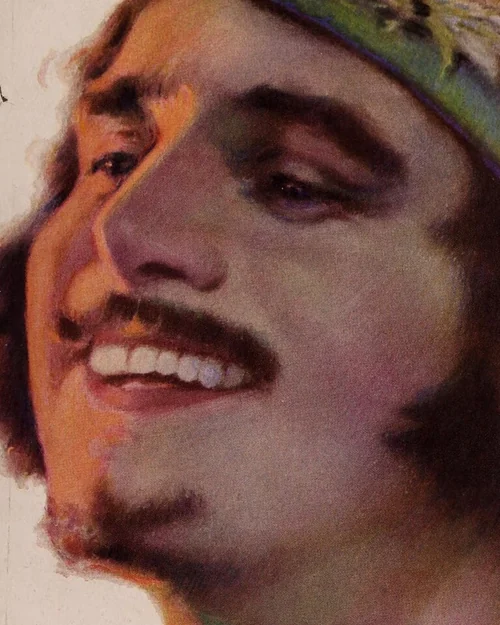
 J. Knowles Hare. Public domain: https://creativecommons.org/publicdomain/mark/1.0/. Cropped to a 4:5 portrait, resized without upscaling, converted to sRGB and compressed as WebP. Source: https://commons.wikimedia.org/wiki/File:Douglas_Fairbanks,_Photoplay_January_1923.jpg. Full credits: /portraits/credits.html#robin-hood
Robin Hood
Play NowRobin Hood is an English legendary outlaw whose stories have changed across centuries of ballads, books and films. The familiar champion who takes from the rich to help the poor expresses a concern with unjust wealth, but he is not consistently an opponent of private property. In the medieval Gest of Robyn Hode, he lends money to a distressed knight so that the knight can recover his estate. His hostility towards the sheriff and wealthy churchmen also coexists with respect for royal authority: in that tale he accepts King Edward’s pardon and enters his service before returning to the forest. These tensions make him a defender of fair dealing within an unequal society as much as a rebel against it. Neither collective ownership nor local self-government forms a settled programme across the legend.
Challenge dimensions
- Ownership
- Collective ownership Private ownership
- Centralisation
- Federal Unitary
Further Reading
The Merry Adventures of Robin Hood
As an Amazon Associate, I earn from qualifying purchases.