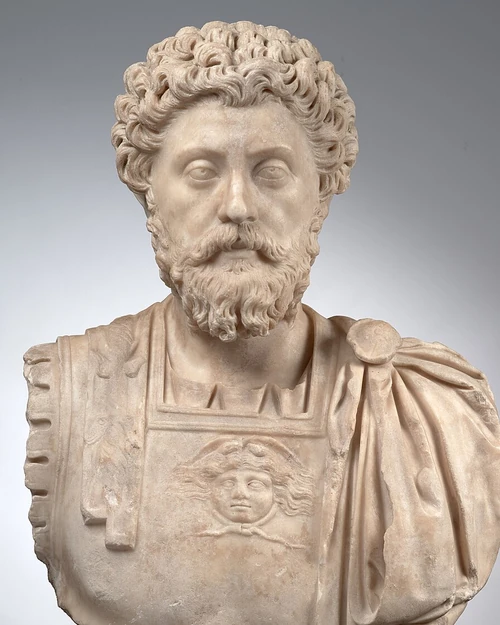
 Daniel Martin. CC BY-SA 4.0: https://creativecommons.org/licenses/by-sa/4.0. Cropped to a 4:5 portrait, resized without upscaling, converted to sRGB and compressed as WebP. Source: https://commons.wikimedia.org/wiki/File:MSR-ra-61-b-1-DM.jpg. Full credits: /portraits/credits.html#marcus-aurelius
Marcus Aurelius
Play NowMarcus Aurelius ruled the Roman Empire from 161 to 180 CE and is remembered for Meditations, private philosophical reflections written partly during military campaigns. A Stoic, he treated reason, justice and self-command as more important than wealth or reputation. He understood human beings as members of a wider moral community, bound together by their shared rational nature. That outlook could extend duties beyond Rome’s borders, even while he governed an empire and fought to defend it. His political position was imperial, with authority concentrated in the emperor, rather than based on popular elections. Yet his reflections praise equality before the law and warn against the corrupting habits of absolute power. The resulting portrait combines concentrated political authority with a demanding belief that rulers owe service to a humanity larger than their own state.
Challenge dimensions
- Governance
- Democratic Autocratic
- Internationalism
- Internationalist Nationalist
Further Reading
Meditations
Stoicism: A Very Short Introduction
As an Amazon Associate, I earn from qualifying purchases.